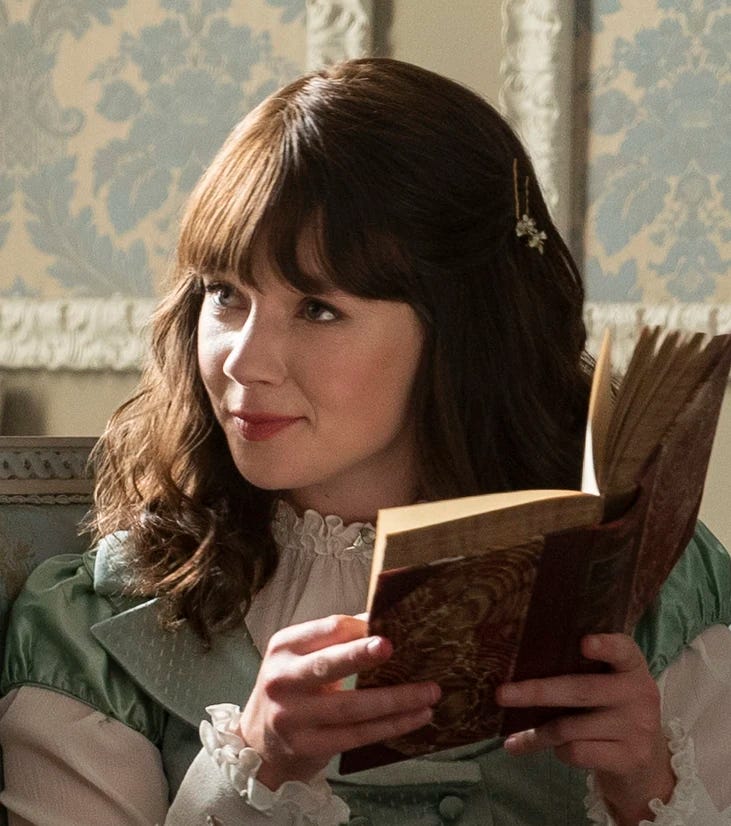
Bridgerton is interesting because it’s the only romance where central couples keep existing after their happily ever after.
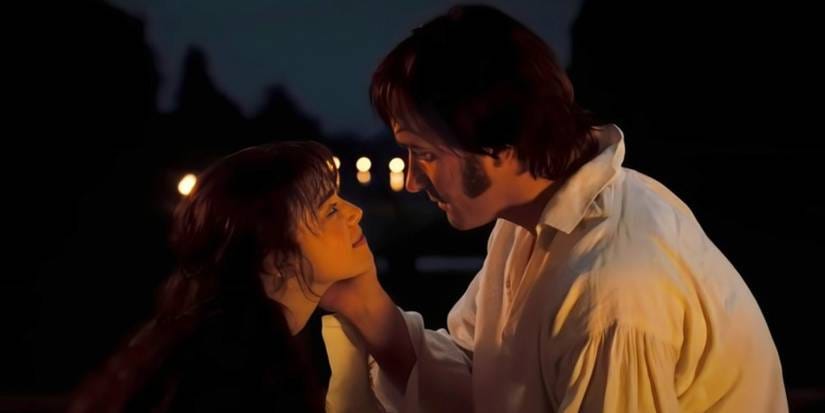
In some romances, like Before Sunrise, slice-of-life realness shows us how couples keep love alive, even once the butterflies have flown away. In period pieces like Pride & Prejudice, well, it’s not usual to see a wife ever come back from riding off into the sunset without her husband.
Characters themselves returning is not so much surprising as it is structural. Julia Quinn wrote romances for eight Bridgerton children, and, by God, we are going to get all 8 seasons. Only, the roles they fill when they return are… unexpected to say the least.
Daphne, Kate, and Penelope, glowing in soft glam, return for a scene each season to say one line about the importance of love, forgiveness, and staying true to one’s heart (which always, of course, coincides with the socio-economic norms of the time, and always in the pursuit of having children.) Anthony had slightly more to do this season as the rare returnee with an opinion - the voice of reason for Benedict to consider finances before marrying.
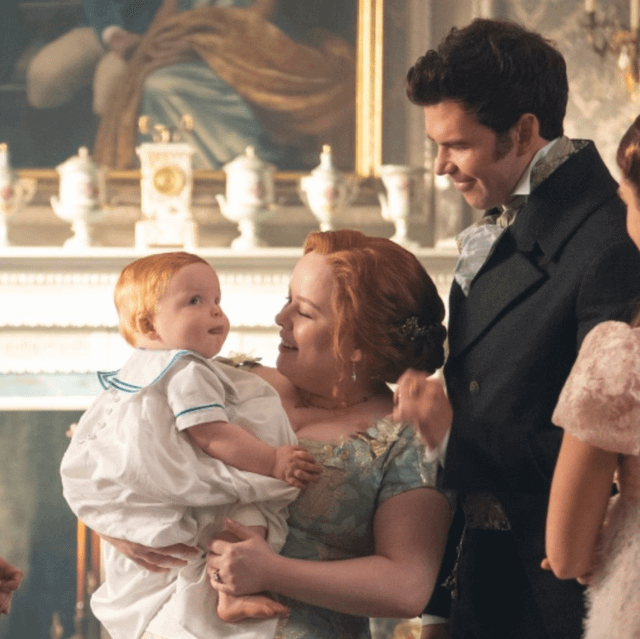
Unlike Bridgerton, most period romances are confined to single novels. Elizabeth Bennet got to ride off into the sunset with Darcy, and because Austen was not motivated by the capitalist demands of multi-season television, Lizzie never had to make cameos when it was Kitty’s turn to fall in love. She isn’t sitting in the background of Mary’s story offering advice. She isn’t glowing softly in maternity gowns so the audience can see that marriage worked out.
She disappears. And that disappearance protects the fantasy.
But Bridgerton can’t do that.
In typical romance on screen, once a woman “wins” love, the story usually closes the book. But with so many characters to get through, characters integrally related to each other’s stories, each season’s happily ever after can’t be an ending. Suddenly, the heroine has no role left. She becomes softer. Quieter. Domestic. Background furniture in someone else’s romance.
Daphne is the clearest example of this problem.
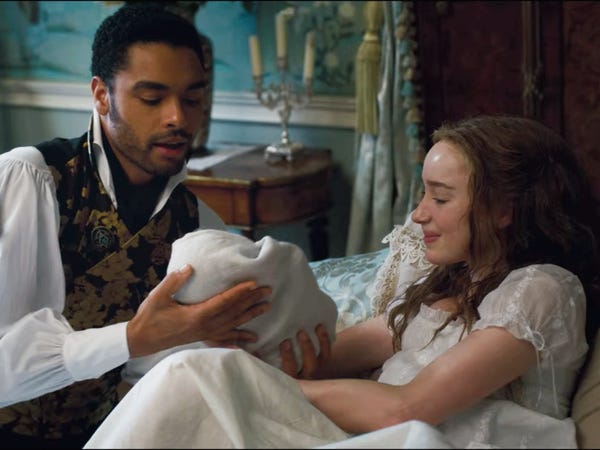
Her entire story revolved around Simon’s refusal to have children. His vow, his trauma, the emotional work it took for him to confront that fear — that was the whole arc. And the ending is him finally yielding. Accepting fatherhood. Love changed him.
Great. Classic romance resolution.
Except then Regé-Jean Page never came back. So now Daphne occasionally shows up alone.
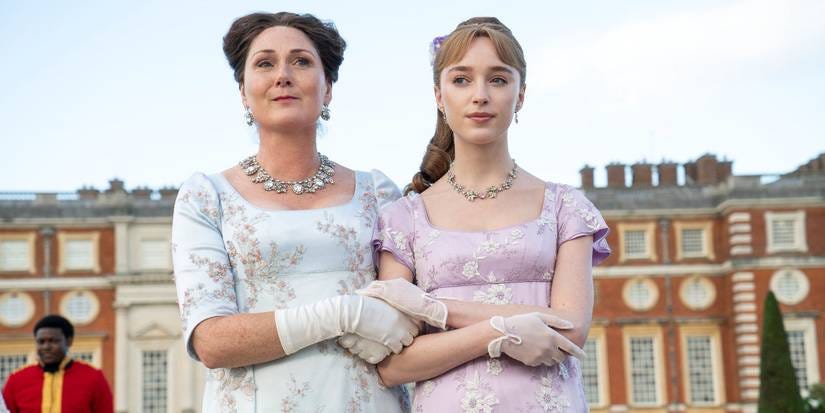
Which means the man who spent an entire season wrestling with the idea of fatherhood now looks like he just… abandoned his family. The show didn’t intend to rewrite Simon as an absentee dad, but that’s exactly what happens when half the couple disappears and the other half still needs to exist.
A romance that requires one half of the couple to vanish reveals how fragile the fantasy actually is.
Elizabeth gets to keep her dignity because she never has to be narratively useful again. She doesn’t return as proof-of-concept that marriage was worth it. She just exits the story exactly when the genre says she should.
Absence preserves dignity, while presence invites diminishment.
Which brings me to Kate.
It was Kate Sharma, not the titular “Bridgerton” son Anthony, who resonated with a female audience, with her confident spinster identity and doting sister persona, who wasn’t afraid to go hunting and ‘clap back’ at men. The women of Bridgerton are what keep the majority female audience coming back. And it is this female audience that is being let down for the second season in a row by feminist ideals taking a sharp right.
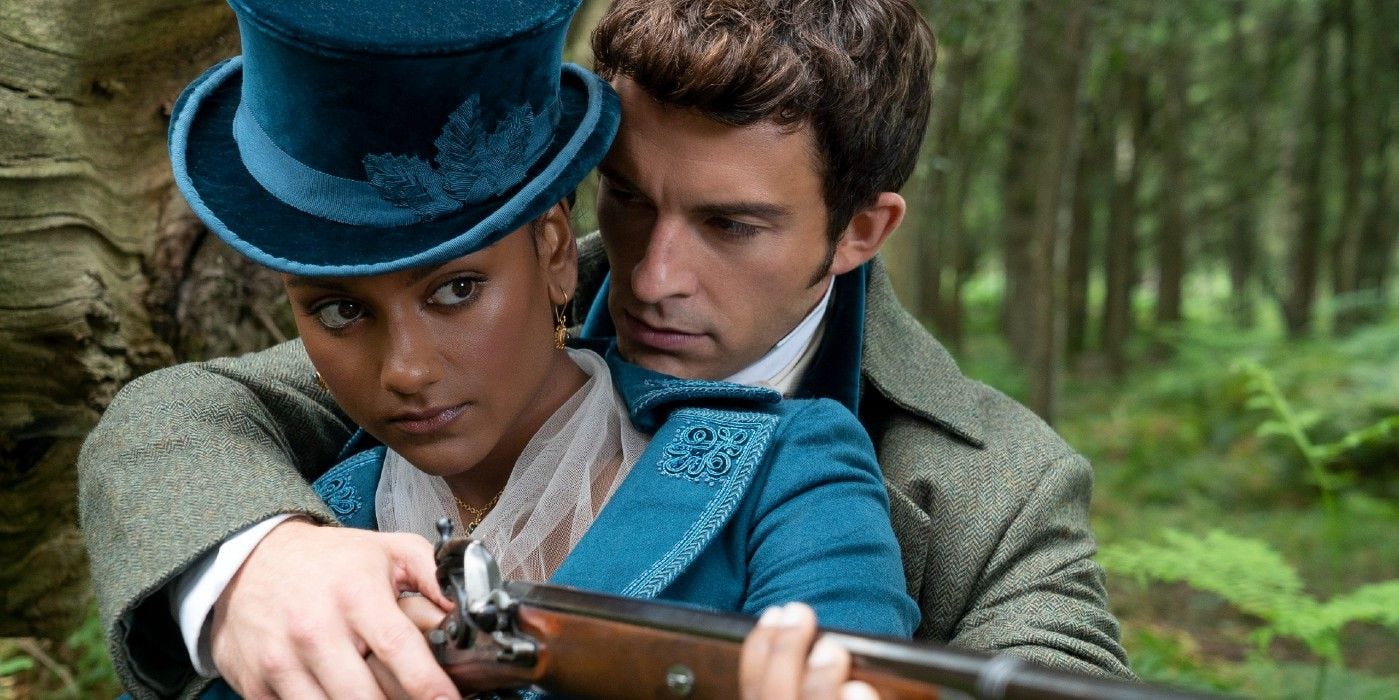
Kate is fascinating because she starts as one of the most forward-thinking women in the show. Sharp, stubborn, competitive, openly resistant to the marriage market. She refuses to perform sweet, agreeable femininity. That’s why her dynamic with Anthony works.
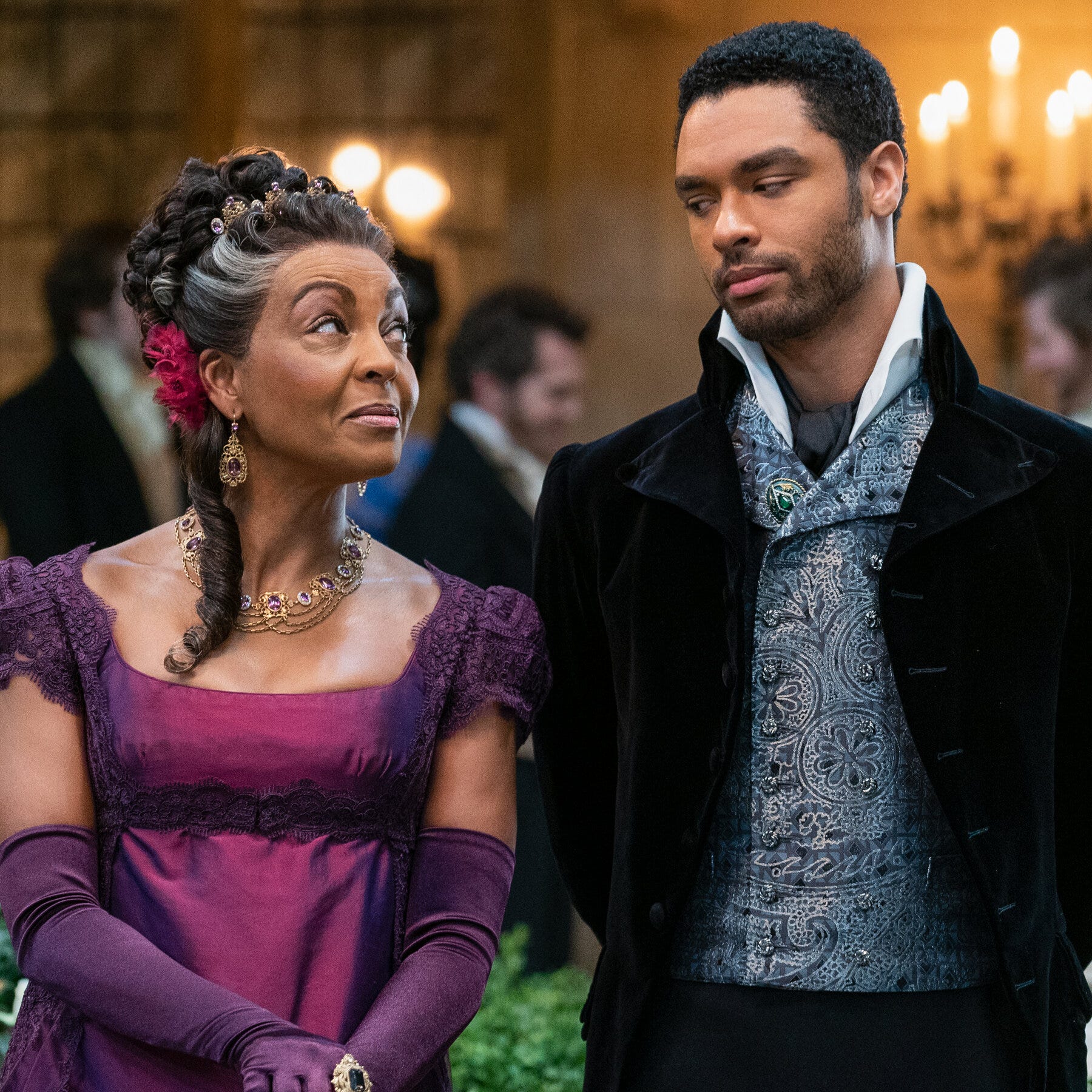
Now, in season 4, she’s returned from her India travels with Anthony, retired from DINK-hood, with a new baby she says “made her soft.” With her hair in (ridiculously 2020s) loose waves, she offers romance advice to the younger girls. Glowing fabrics. Softer silhouettes. Subdued colors. And never again a muddy boot in the foyer.
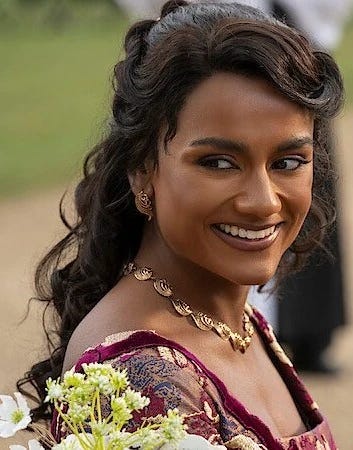
Costuming in period drama is ideological. Kate’s wardrobe shift during season two visually codes completion - from those bright teal blues to her ‘falling in love era’ lavender. The sharp edges that made her dangerous in season 2 disappear, visually shifting to white, baby blue, and… glittering gold lace for some reason? Happiness, visually, becomes softness.
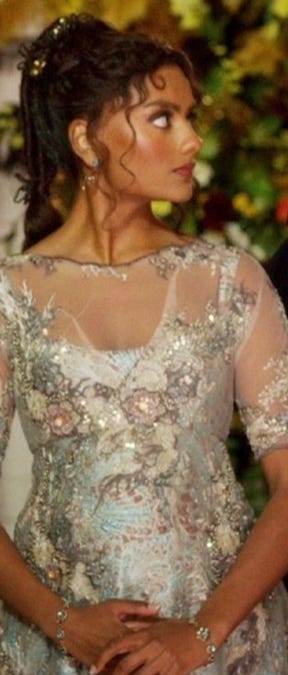
The irony is that Bridgerton clearly wants to feel progressive.
It updates the genre. Modern, race blind casting. Female love (and female pleasure) front and center. And most recently, Francesca’s storyline diverges from the books to include a queer romance.
It all sounds very feminist, but the story doesn’t actually change.
The ending still looks the same. Romantic partnership. Domestic stability. Quiet contentment. The show expands who women can love, but not what women are allowed to want.
Kate — the most intellectually independent woman in the story — still ends up demonstrating the same ideal as everyone else: marriage, babies, serenity.
So the real question becomes:
Can Bridgerton imagine happiness for women that doesn’t require narrative death?
Right now the formula is pretty obvious.
Marriage = closure. Babies justify the ending. And when the characters continue to exist after that ending, their presence slowly dilutes.
They stop being protagonists and start becoming propaganda.
Which is a good time to mention Eloise.
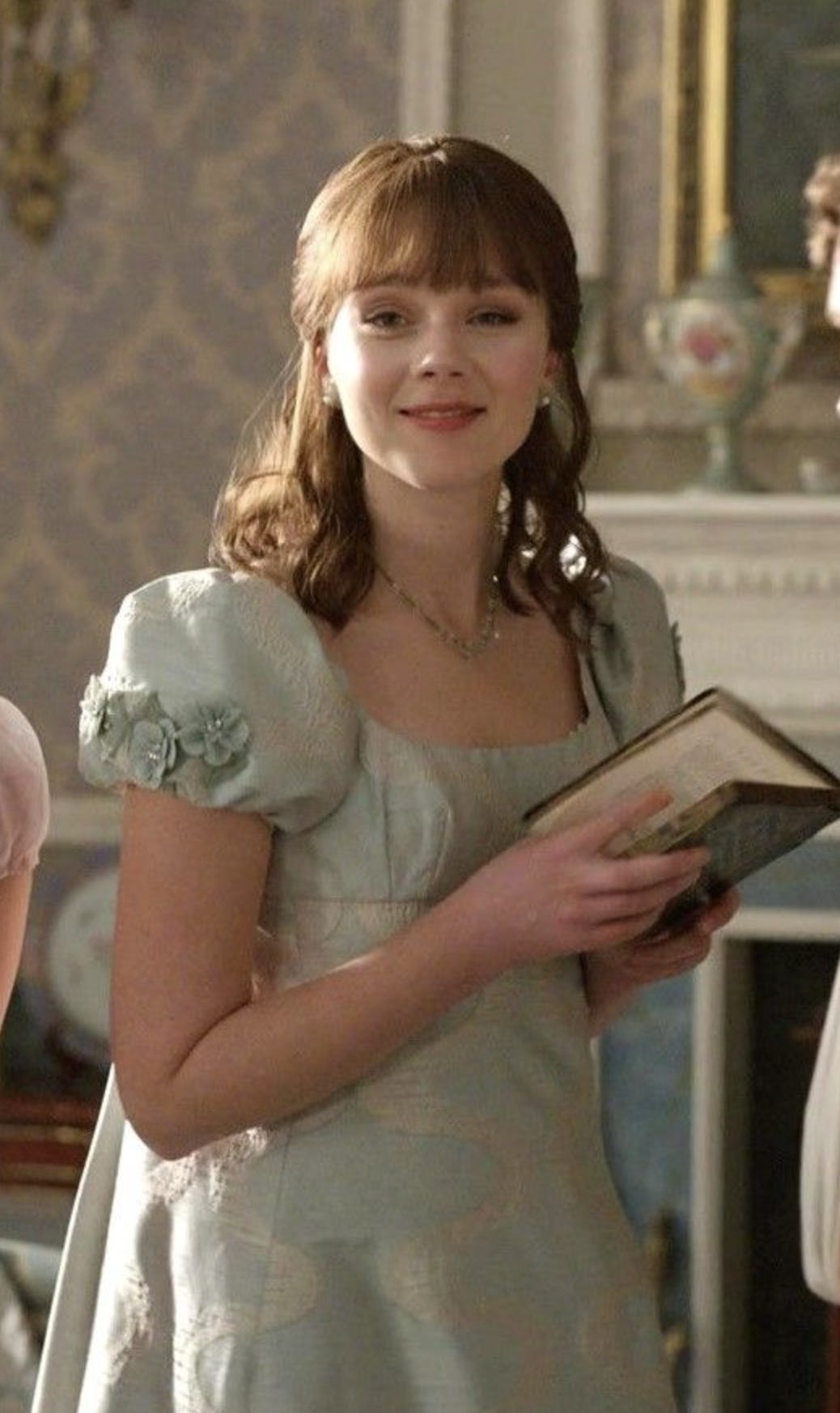
Eloise has spent the entire series openly questioning the formula. She doesn’t want marriage. She doesn’t want motherhood. She rejects the idea that her life should revolve around finding a husband.
That’s her whole character. Even if season 3 tries to paint her feminist ranting as a selfish need to divert conversations to her interests.
“You know, lately I have thought you are interested in everyone but me. But I am starting to wonder if, in fact, you are only interested in yourself.” - Hyacinth Bridgerton to Eloise Bridgerton, Season 4
And yet season 4 shows her righteous feminist discontent softening. Not because of any actual structural changes to society, like the rights of women she discussed with Theo in season 2 (no, why would that be the case?) But because Cresida Cowper, aka Cresida Penwood, of all people says Mary Wollstonecraft doesn’t “place enough value on love.” And Eloise just nods like that was at all a rational reflection on A Vindication of the Rights of Woman.
So if the show follows the books and marries her off to a widower — Marina’s ex-husband — and turns her into stepmother to his children, I will scream, because at that point the pattern becomes impossible to ignore.
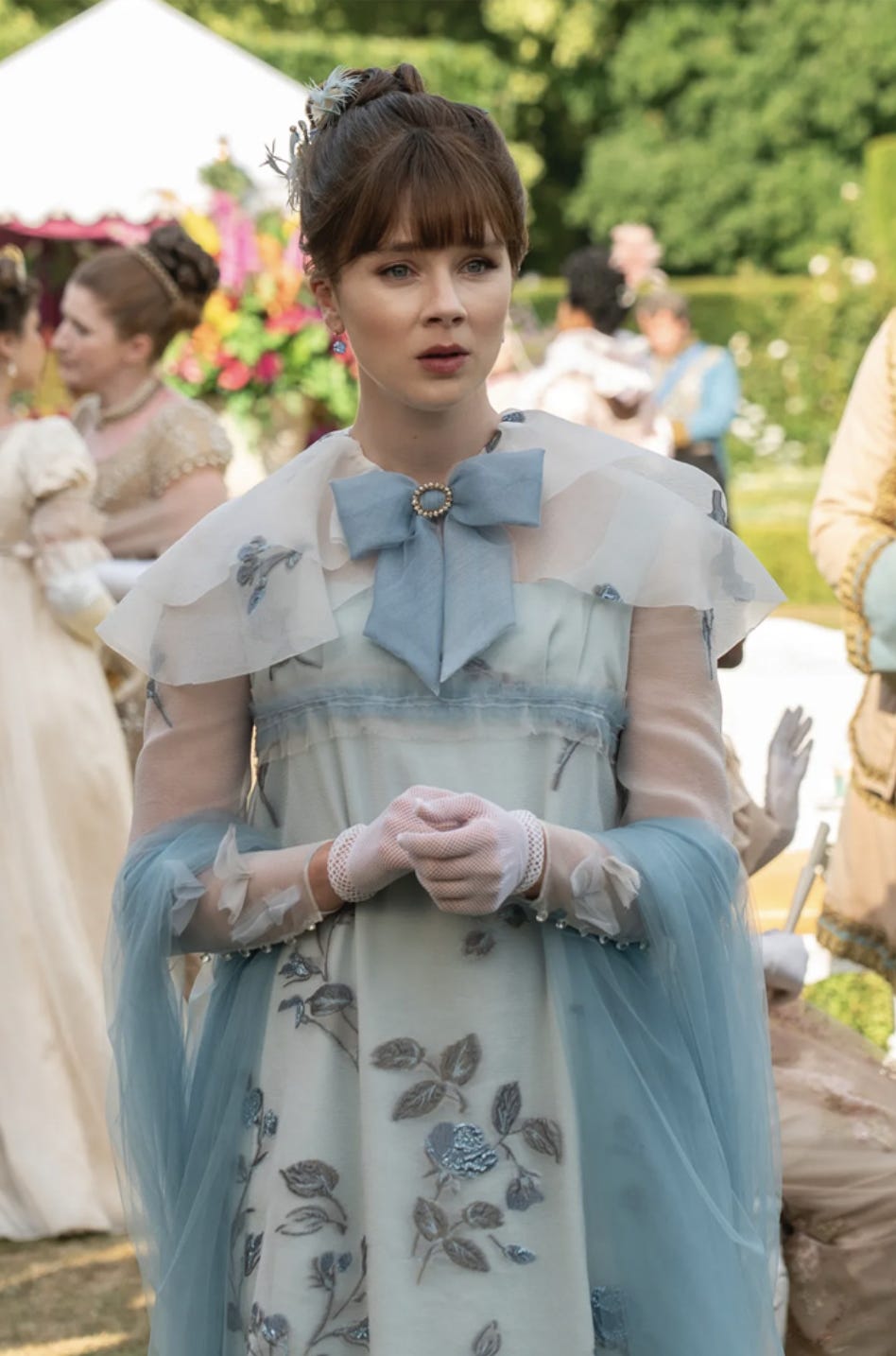
When a story repeatedly forces its most resistant woman into caretaking roles, it stops being romantic and starts becoming disciplinary.
The show wants to feel feminist. It opens up who gets to be centered, who gets desired, who gets the love story at all. It updates the look, the casting, the surface-level politics of it.
But when you actually look at what kind of life it imagines for these women, it’s always the same ending.
Marriage.
Babies.
Soft lighting.
Even for the women who never wanted it.