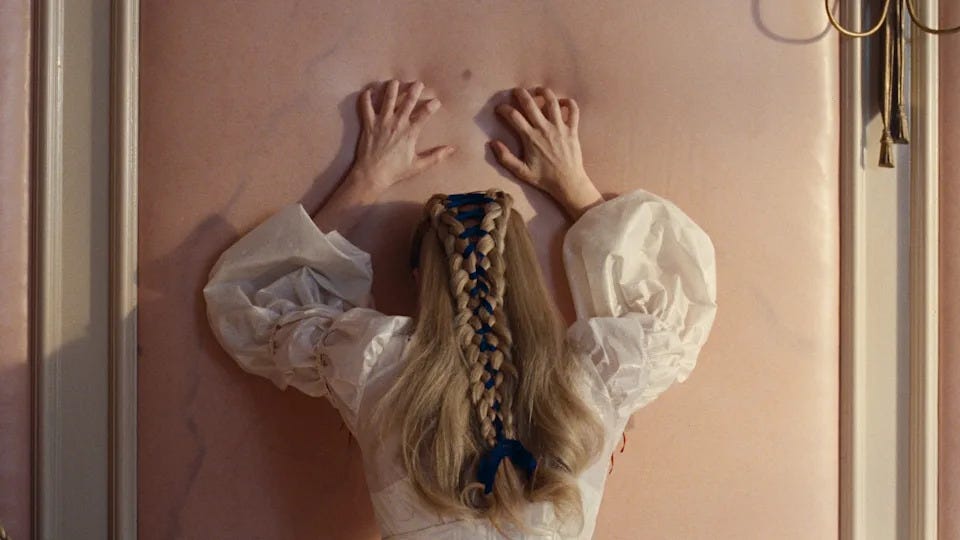
I went into the Wuthering Heights movie with expectations set low. My favorite critics had scorned it, my fellow English majors were offended, and to top it all off, a white man was playing Heathcliff.
Admittedly, it wasn’t my favorite book in high school. Even if the movie was 100% faithful, that wouldn’t work in my favor, and yet how would I know? The only line I remembered was the most famous, the hammering of the theme home:
“He is more myself than I am. Whatever our souls are made of, his and mine are the same.”
If there is one thing that an adaptation of Wuthering Heights has to do right, it’s capture that devotion, a codependent entitlement to each other’s selves.
You can imagine my surprise to find that this point was certainly rammed home.
And yet, many critics still didn’t like it. Why?
One sore spot was the theme of race. Heathcliff in the novel is meant to be racially ambiguous, hinted at being dark-skinned, and possibly East Asian, “Who knows but your father was Emperor of China, and your mother an Indian queen?” In Victorian England, race extends into the intersection of socio-economic standing, class expectations, even aesthetic romantic preferences. All of this to say that Heathcliff is not meant to be a socially acceptable match for Catherine, made all the more apparent by the visual depiction of his racial othering.
Andrea Arnold’s 2011 version was the only film to depict Heathcliff as a man of color, yet other films’ castings were not reviled as much as Emerald Fennell’s. Perhaps that’s because we thought we’d know better by 2026. But still, because race is inherently tied to wealth in Victorian Britain, Fennel keeps at least one plot essential that matters: Heathcliff is poor. And definitely too poor to be a match for Catherine.
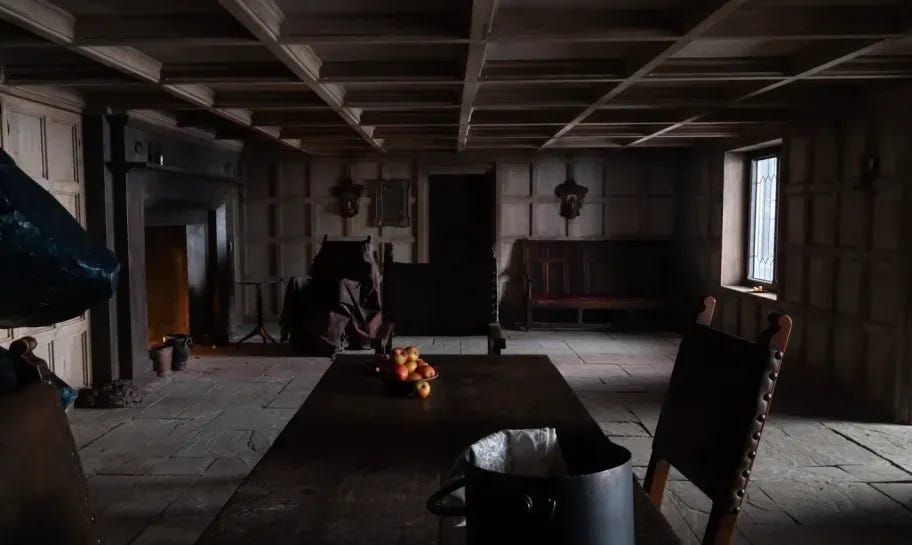
There really is no better word for the conditions of the underclass in this movie than dark. The lighting is dark, the hanging at the beginning of the movie is dark, the disgusting habits and abusive tendencies of Catherine’s father are dark. And despite how squeamish it made me, the fact remains that Fennel captures the gothic atmosphere of the original novel well. Critics might be reluctant to admit that if imitating the novel is what you’re after, Fennel offers this in aesthetic.
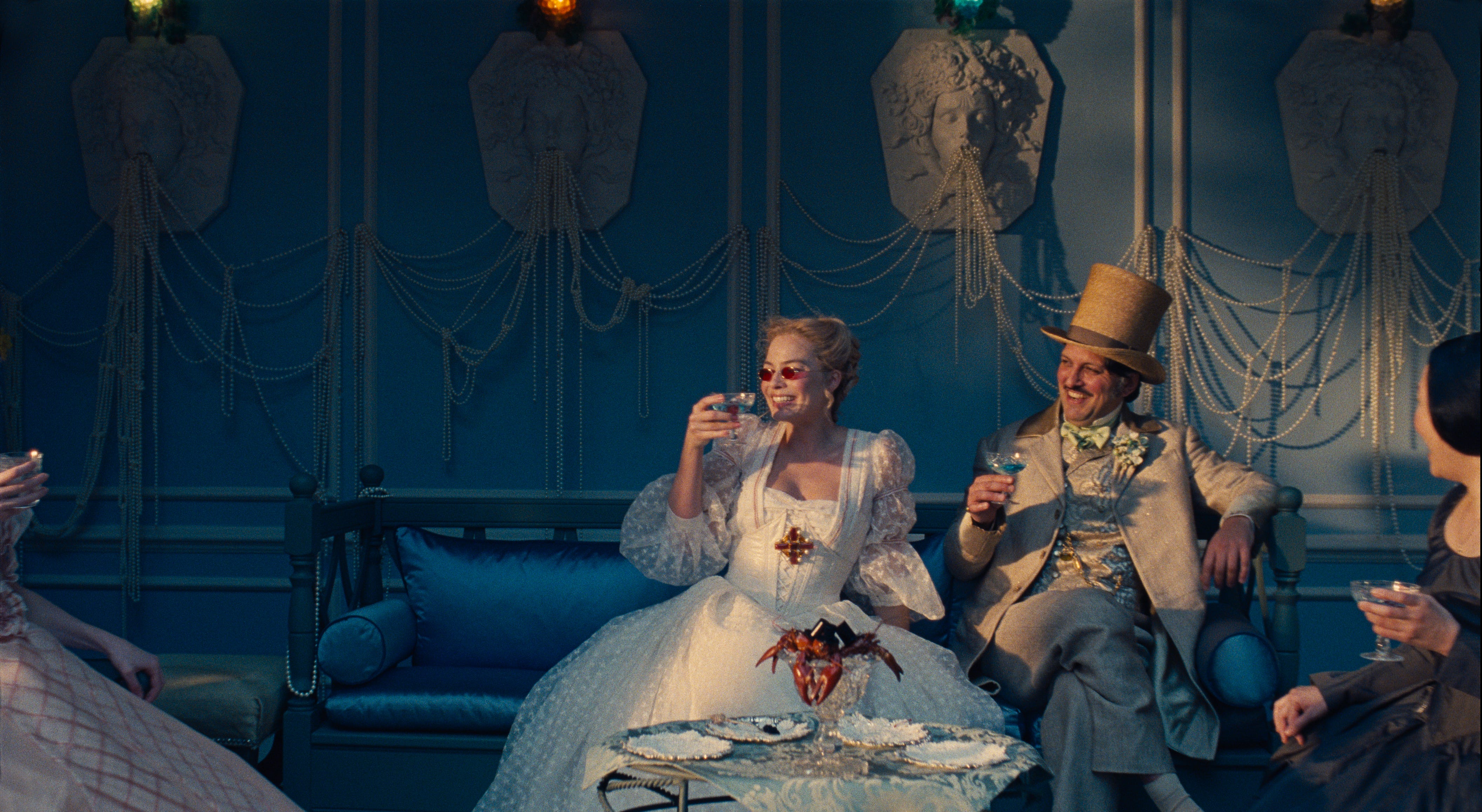
However, gothic is not her only cinematography style, which I believe is where she loses critics. Gory, rodent-infested London is paired with vibrant and modern glamour at the Linton estate. Euphoria-esque rhinestones, red sunglasses, and sparkling cellophane become the uniform of the newly wealthy Catherine. A contrast I found experimental yet thematically grounded. Like it or not is another discussion, but the style is purposeful.
But what about plot? What about the essentials of the poorly-marketed “greatest love story ever told?” (Aside - wtf was that messaging about?)
Plot-wise, not everything that happens in the books happens in the movie, but the theme is fulfilled ten-fold. Fennel captures the push-and-pull, the codependence, and the romantic tension of Catherine and Heathcliff, that is gothic in ideology, if not entirely in “vibe.”
Moreover, I don’t see anyone giving Fennel her flowers for adding a fitting theme to the original story: sexuality.
As critics have been keen to point out, Wuthering Heights is kinky. Like really kinky. It’s been said to have transformed the gothic romance into a Victorian “Fifty Shades of Grey.”
My rebuttal: why can’t Wuthering Heights be both?
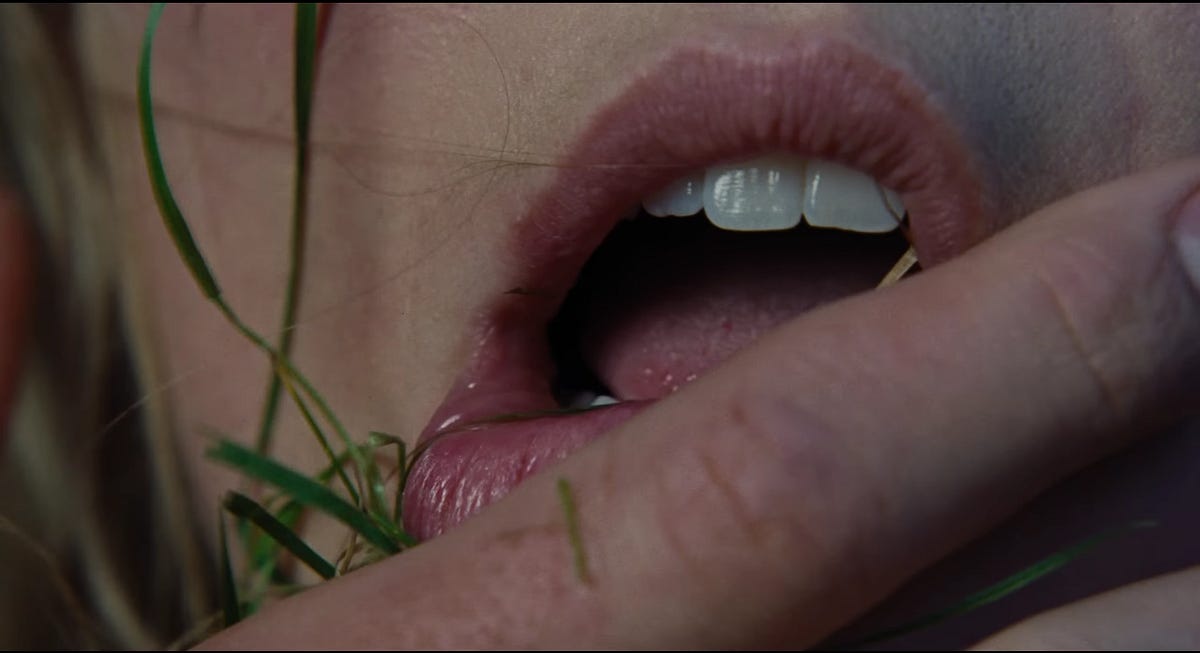
If there’s one thing the Brontë sisters do well, it’s titillating without titillating. But it’s 2026 now! We have HBO! One can only imagine what Emily Brontë would have wrote if they lived during a time where they could be explicit about sex.
“Everything is about sex, except sex. Sex is about power” is a (doubtfully Oscar Wilde) quote that comes to mind.
So Brontë can’t write about sex, but she can write about “wild” and “wicked” passion. She can’t have Heathcliff say he loves Catherine straight out, but she can make him say “I cannot live without my life! I cannot live without my soul!” Their relationship can’t be described as kinky, but can claim words like obsessive, destructive, and all-consuming.
The sex scenes in Fennel’s Wuthering Heights may be excessive, but they do symbolize the changing power dynamics true to the novel. Their first sexual encounter is on the Moors, a direct result of Catherine first learning what sex is. They could have ‘banged’ right there, but no, Heathcliff isn’t a proper suitor yet. They need a little more push and pull befitting Catherine’s childish and material character.
It’s only once Heathcliff returns with money and a haircut, that the two return to an emotional intimacy, finally exposing the truth of Catherine’s confession to Nelly. As a direct result of an emotional and social equality, the two enter full-blown physical intimacy. There’s even a montage of all the places they ‘do it’ set to an original score by Charli XCX.
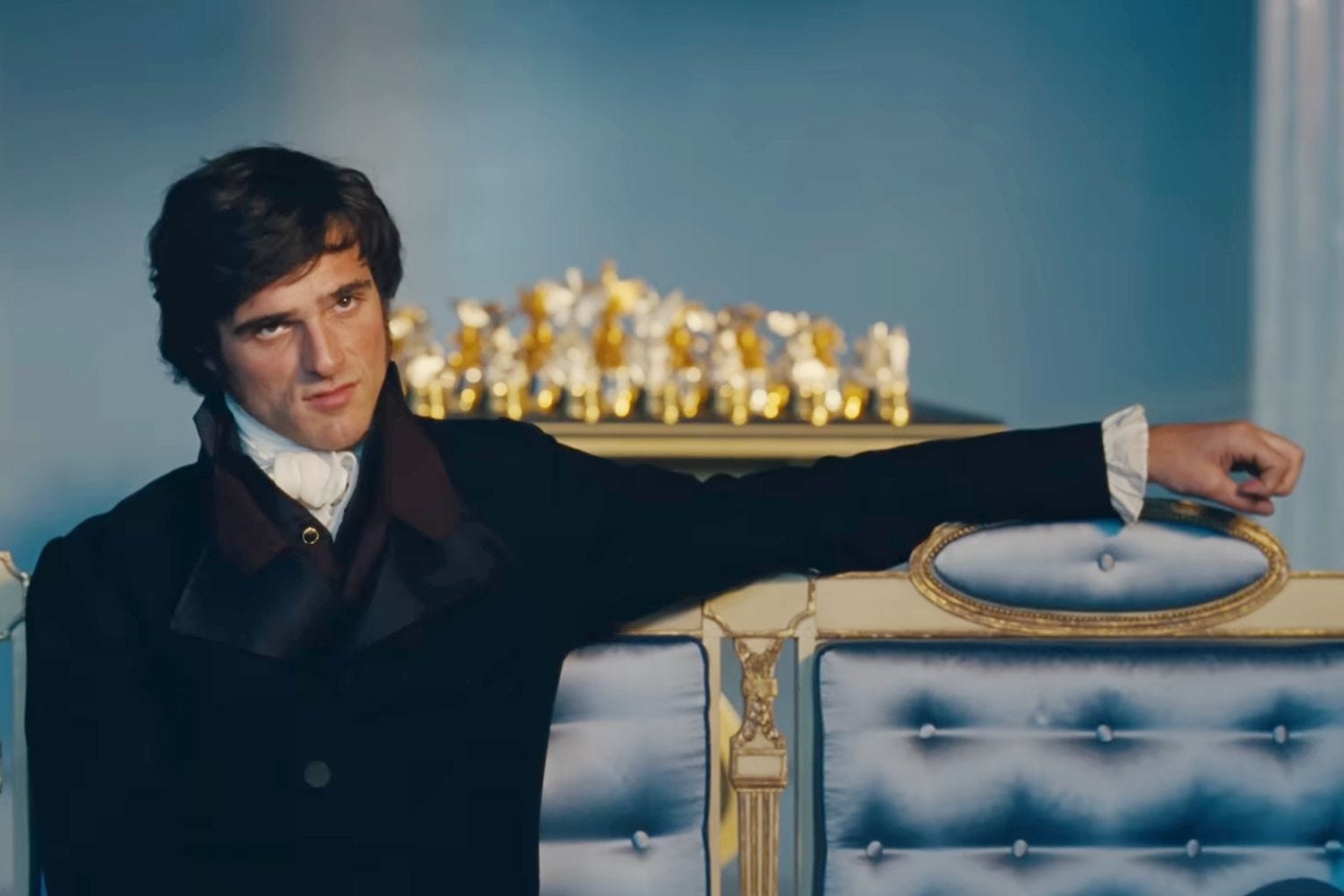
Catherine ends their affair during a particularly kinky sex scene, where the two speak poorly of Edgar Linton, Catherine’s own husband. She states that she has degraded herself and sends Heathcliff away, the power imbalance returning through this non-mutual choice.
The two continue to torture themselves anyways, because of course they do. Catherine, now visibly pregnant, enters a period of abstinence, while Heathcliff marries Isabella and becomes more sexually depraved than ever. (Wtf even was that dog roleplay?) Sex, or the absence of it, becomes a new symbol of their mutual unhappiness. And that is how their story ends, unhappy, unreconciled, literally haunted by a love that can never materialize.
Not unlike sexual desire, some might say.
Ok, ok but why does it have to be sex, why can’t it be love?
Well, for one, it’s both sex and love in Fennel’s Heights. In the book, who knows, maybe they would have banged it out and got over it. In the movie, they bang it out and still long to return to each other. There’s an ever-present emotional intimacy drawing that brings them back, best displayed in the finale of the movie which recounts their emotional intimacy as very non-sexual children.
But, for two… preference, I guess?
If you don’t like too much sex on screen, yeah, it’s probably not the movie for you, and that’s OK. The movie is also not a perfect replica of the novel, nor does it have historically-accurate costuming. The outfits, like the aesthetics of the film itself, are bold and inherently will provoke backlash, and that is OK.
If, however, you do enjoy an all-consuming bond true to the feel of the novel, childish romantic taunts similar to Brontë’s original conception, or even appreciate symbols as heavy-handed as a book character named “Linton Heathcliff,” (see: “skin walls”), I suggest ignoring the critics and trying it out for yourself.
Damn, even if you’re just a girl who likes Charli XCX and yearning, give it a try.
But, to conclude, are romantic obsession and sexual desire different? Yes, of course they are.
At the same time, sex is a physical expression of that same intensity. Fennel closes the gap between the two in a way Brontë never could, by using the social allowances of our time to her advantage. Not unlike Brontë herself, pushing the limits of what a novel about romance could be.
Wuthering Heights has always been about desire that goes beyond what the text could say, 2026 just makes it physical. Very physical.
And that’s OK.